
What Does a Canadian Author Need Before Self-Publishing a Book?
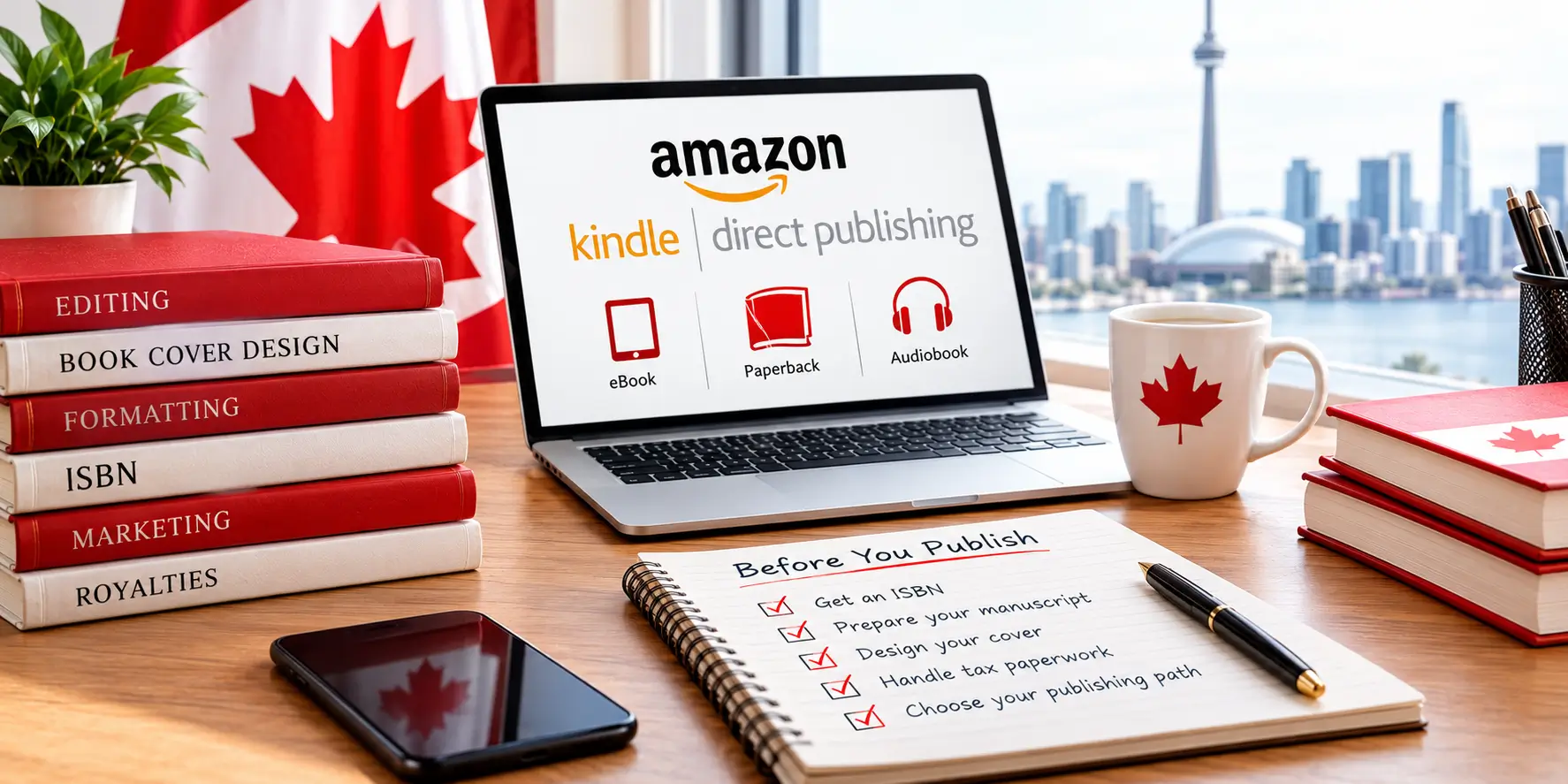
If you’re a Canadian writer thinking about self-publishing, you’ve probably already noticed there’s a lot of generic advice out there aimed at US authors, and it doesn’t always apply cleanly once you factor in ISBNs, taxes, or shipping costs here. Before you upload a manuscript anywhere, it’s worth sorting out a few things specific to canadian self publishing companies.
Why Skip Traditional Publishing Altogether?
The answer for most authors is time and control. Every single thing has a cost, including agents, waiting months for replies, then waiting another year or two after a book deal actually lands. Self-publishing cuts all of that out. You write the book, you decide what the cover looks like, you set the price, and you publish when you’re ready, not when a publishing calendar says you can. The royalties are better too. Traditional deals often pay authors somewhere around 10%. Self-published authors can keep 70% or more on the same sale.
Who Are the Top 5 Publishers in Canada?
It helps to know what you’re opting out of. Canada’s traditional market is dominated by five companies:
- Penguin Random House
- Hachette
- HarperCollins
- Macmillan
- Simon & Schuster
These are the companies that come up first as soon as someone searches for “who are the big 5 publishers in Canada”. Each runs a Canadian branch, and between them they publish the bulk of mainstream fiction and nonfiction sold in the country. Getting a manuscript in front of any of them almost always means going through an agent first, which is a whole process on its own.
What Should You Actually Know About Kindle Direct Publishing?
Most self-publishing authors choose Kindle Direct Publishing. As Amazon’s free platform, KDP is easy to use and gives new authors access to the largest bookstore on the planet. You simply set the price of your book and choose your royalty rate (35% or 70% depending on the price you’ve set), and KDP enables you to sell both ebook and paperback versions. You can even sell your book in Bolton, so Canadian customers needn’t have their purchases.
One thing that catches Canadian authors off guard is that you’ll need to fill out US tax paperwork before Amazon pays you a cent. That means getting a Tax Identification Number sorted out, and it’s not something you want to be dealing with the week your book launches. So, it’s better to handle it early.
What Do Self-Publishing Companies Actually Add?
Direct Publishing is free, but it’s also entirely on you. That’s where Canadian self publishing companies come in. Places like First Choice Books out of Victoria, or Kobo’s publishing arm in Toronto, will handle editing, formatting, cover design, and, in some cases, print distribution to actual bookstores, not just an online listing. Kobo in particular will push your ebook out to multiple retailers at once instead of locking you into Amazon only.
Obviously, none of that is free. These companies charge for their services, sometimes a flat fee or a package price that bundles everything together. Whether that’s worth it depends on how much of the process you actually want to do yourself.
Amazon or a Local Company: How Do You Pick?
There’s no universal right answer here. If you’re the type who doesn’t mind formatting your own files and figuring out cover dimensions on YouTube tutorials, Kindle Direct Publishing costs nothing and gets the job done. If you’d rather hand the technical side to someone who’s done it a hundred times, one of the many Canadian self publishing companies will take that off your plate, usually for a fee that’s easier to swallow than it sounds once you factor in the time saved.
A lot of authors actually split the difference. Hire a local company for editing and cover design, then publish the final files yourself through Amazon to keep the full royalty on every sale.
What Do You Need Sorted Before You Hit Publish?
A brief, no-nonsense checklist, but missing any of these can lead to trouble later:
- An ISBN. Canadians can obtain them for free from Library and Archives Canada with no fees, while authors in the US usually have to pay for their copies.
- An edited manuscript, not just one whose spell check you have run at one o’clock in the morning.
- Cover files fitting the dimensions needed by the platform on which you want to publish.
- Your tax documents, including your Tax Identification Number, if you plan to use Amazon.
- Decide where you want to sell your book: only through Amazon or on different platforms like Apple Books and Kobo too.
What About Taxes and Getting Paid?
Kindle Direct Publishing pays out in US dollars, so check what your bank charges to convert that. Some Canadian publishing services pay in Canadian dollars instead, which simplifies things at tax time. Either way, that royalty income is taxable business income here, so hang onto receipts for editing, cover design, and anything else you paid for along the way.
Frequently Asked Questions
Do I need a U.S. tax number to publish on Amazon?
You’ll have to complete Amazon’s U.S. tax paperwork if you’re using Kindle Publishing. It’s better to deal with that before your book goes live rather than leaving it until the last minute.
Do I have to use a Canadian self-publishing company?
No. You can do the whole thing yourself if you want. Canadian self publishing companies are there for authors who would rather pay for professional help than spend their own time learning every part of the process.
Do I have to sell my book only in Canada?
No. If you publish through Kindle Direct Publishing, your book can be made available to readers in other markets too. You can also look at other retailers if you don’t want to rely on Amazon alone.
Can I use a Canadian self-publishing company and Amazon at the same time?
Yes. You can hire self-publishing companies for things like editing or cover design and then publish the finished files yourself.
When should I deal with the tax paperwork?
Do it before your book launches. If you’re using Kindle Direct Publishing, Amazon requires tax information from authors, and leaving it until the last minute can create an unnecessary headache.
Before You Publish
Self-publishing in Canada isn’t complicated, but it rewards a bit of preparation. Know what the publishing companies actually offer, so you’re choosing self-publishing on purpose, not by default. Get your ISBN and tax details out of the way early. And pick your path, whether that’s the DIY route through Amazon or working with a Canadian company that handles the heavy lifting, based on how hands-on you actually want to be.

An experienced publishing enthusiast with a deep understanding of the Canadian book industry and the evolving world of self-publishing. Passionate about storytelling and author success, the writer shares practical guidance on manuscript preparation, editing, publishing pathways, marketing strategies, and industry trends. Through insightful, research-driven content on bookpublishingcanada.ca.