
Common Questions Authors Ask About Book Publishers In Canada
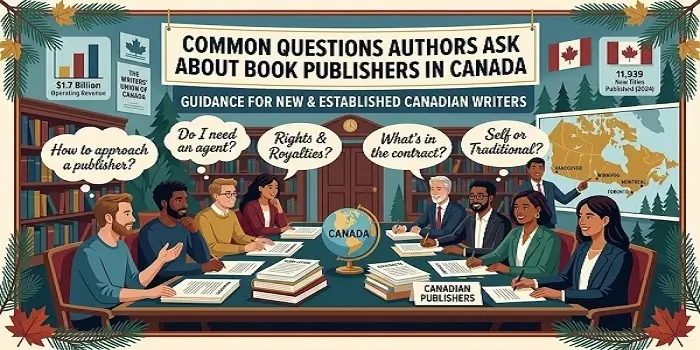
It can feel like the hard part to write a book, but most authors discover that finishing the manuscript is just the start. The next question that appears instantly is: Who should I approach? What can I expect from a contract? Do I need an agent? And how can I tell whether publisher offers are genuinely worthwhile?
The Canadian publishers are offering opportunities for new and established writers, and it also has its own expectations, submission habits, and business practices. It is reported that the country’s book publishing industry will generate $1.7 billion in operating revenue in 2024, and 11939 new titles have been published that year. This blog will guide you on the common questions that authors need to ask about publishers in Canada.
What Are The Steps To Approach A Canadian Publisher?
Once you have completed your manuscript, you should resist the temptation to send it everywhere at once. A targeted submission of a manuscript is usually stronger than a generic mass email.
1. Research Suitable Publishers
You should create a shortlist which is based on submission policy, genre, catalog, readership, and publishing model. Now you need to search publisher websites and professional directories, then check whether each company is currently open to unsolicited submissions.
The Writers’ Union maintains a searchable Directory of Canadian Publishers that identifies publishers that accept unsolicited manuscripts and describes the types of work they consider.
2. Prepare The Submission Package
You need to follow the instructions of the publisher exactly. One company may request a synopsis and sample chapters and another may ask for a complete manuscript.
You should write a professional query but humanized. Now, introduce the book, provide relevant author credentials, identify the target audience, and explain why you chose that particular publisher.
Little details are much more crucial. If you will do wrongly addressed email or a manuscript that ignores formatting instructions can make an otherwise promising submission look careless.
3. Submit Strategically
It is possible to send multiple submissions, but transparency is important. The Writers’ Union recommends telling publishers that you plan to submit a manuscript simultaneously and suggests giving them a reasonable consideration period, such as three months.
You should keep a simple submission record. Must track dates, requested materials, responses, and follow-up deadlines. It can prevent confusion when several editors review the same project.
4. Evaluate The Publishing Offer
An offer may seem exciting, but it is also a business document. You need to examine the royalty structure, territory, publication schedule, formats, advance, subsidiary rights, reversion clauses, and responsibilities for production and promotion. It is better not to assume every right needs to be granted.
It is specifically emphasized by the Writers’ Union that publishing contracts are negotiable and recommends professional legal review for writers who are not represented.
5. Plan Beyond Publication Day
Ensure that a publishing deal does not make an author completely hands-off. Readers still need to discover the book.
Authors must discuss launch expectations, review copies, retailer listings, events, social media activity, author websites, and other promotional responsibilities with the publisher. Professional book marketing services can complement the publisher’s own promotional efforts according to the agreement and the budget of the author.
What Questions Should Authors Ask Before Signing?
The best time to ask difficult questions of the publishers is before signing, not after problems appear. If you have a clear conversation early, it can prevent misunderstandings later.
● Who Owns Which Rights?
You should ask this question specifically about print, audiobook, film, merchandising, ebook, translation, television, foreign territories, and future formats. Be careful with rights, as they should not be treated as one giant package without explanation.
The Writers’ Union says that authors often carry important exclusive rights under Canadian copyright law and may license particular rights to publishers.
● What Expenses Will The Author Pay?
Traditional and paid publishing arrangements are not the same. The Writers’ Union describes traditional publication like a royalty-paying contract where the author does not need to pay production costs or have an obligation to purchase a set number of books.
If a company asks about the substantial upfront payment, you must understand exactly what you are buying and how that arrangement is differentiated from conventional publishing.
● Who Controls The Final Book?
You should ask who approves the cover, illustrations, title, pricing, editorial changes, and format. Some agreements often provide publishers broad control, while others provide authors with specific consultation or approval rights.
Not any approach is automatically wrong. The problem may be whether you understand the arrangement before committing.
● How will Royalties Be Calculated?
You do not need to focus only on the royalty percentage. Must ask what the percentage applies to, when statements are issued, how sales are defined, and what deductions may affect the calculation.
If the underlying definition of revenue is unclear, a seemingly generous percentage can mean little.
● Can The Contract Be Reviewed Before Signing?
Yes, and you should take the opportunity to review the contract before you sign it. The Writers’ Union advises writers to fully understand contract terms and notes that reputable book publishers Canada should allow time for review and advice. A publishing lawyer can help you identify clauses an excited first-time author may overlook.
Frequently Asked Questions
1. How much longer should a manuscript be before you contact a publisher?
The length of the manuscript depends on the genre. A novel should generally be complete before submission and a nonfiction book is sometimes pitched with a proposal. Check each publisher’s guidelines, as requirements can vary significantly by company and genre.
2. Can first-time authors get their book published without previous credentials?
Yes, previous publications can help authors, but they are not always necessary. Choose a strong manuscript, clear positioning, a suitable target audience, and professional submissions to provide yourself a legitimate opportunity with the right editorial team.
3. How can I find legitimate publishing opportunities?
You should begin with professional industry directories, literary organizations, publisher websites, and established writing communities. Must check submission policies carefully and research the company’s published books, distribution arrangements, contract practices, and reputation before you send your manuscript.
Conclusion
Finding the right publisher is not just about sending the manuscript to the largest possible number of companies, but you need to find a genuine fit. Research the catalog, protect your rights, understand submission rules, and examine each contract clause carefully. Canada’s publishing industry remains substantial, but rising costs mean publishers are making careful commercial decisions. Authors should approach the process as both a creative opportunity and a business decision.

An experienced publishing enthusiast with a deep understanding of the Canadian book industry and the evolving world of self-publishing. Passionate about storytelling and author success, the writer shares practical guidance on manuscript preparation, editing, publishing pathways, marketing strategies, and industry trends. Through insightful, research-driven content on bookpublishingcanada.ca, the goal is to empower aspiring and established authors to confidently navigate their publishing journey in Canada.